
"Ethiopia coffee culture"
3000 article(s) found

Stories of Coffee Fine Coffee Culture Story
Working in Ethiopia for more than three years, from time to time to receive visiting domestic delegations and introduce them to Ethiopia's 3000 years of ancient civilization and customs, there must be the following story: Ethiopia is the origin of coffee, which is called Bunna in Amharic, the native language of Ethiopia. According to legend, there is a card in the Gima area in the southwest of ancient Ethiopia.

Coffee History, Culture and Development in Ethiopia
Yega Sheffield Coffee refers to the Yega Sheffield Coffee produced in Ethiopia. Yega Xuefei is the name of a local town. It is about 1700-2100 meters above sea level. Now Yejashafi coffee has become synonymous with Ethiopian boutique coffee. History: at first, Yejassefi's coffee trees were planted by European monks, and later by farmers or cooperatives. Yejia Xuefei

The main culture of Sidamo coffee beans
Following caf é (Wechat official account vdailycom) found that Coffee Cafe opened a small shop of its own coffee culture: from a historical point of view, coffee has a lot to do with the history and religious culture of Ethiopia. In ancient times, Ethiopia was called Abyssinia and Axum, which was ruled by the Solomon Dynasty. According to the literature, it contains Mitt.

The original country of ancient coffee culture in Ethiopia
Essex is the first country in the world to grow coffee and maintain the oldest coffee culture. It still maintains a very traditional and ancient coffee growing process. Ethiopia latitudes 6 to 9 degrees north. Tropical forests 34 to 40 degrees east longitude and 1600 to 1800 m above sea level. Harald is not only the most expensive coffee in the world, but also a beautiful legend. Harald, a reflection of ai

Ethiopian Coffee Manor Culture introduces Flavor
Coffee Culture Coffee beans in Ethiopia grow in close to the natural environment. After years of planting under the same growth conditions, Ethiopian coffee beans have gradually adapted to the environment here. More than 60% of coffee beans are grown in forests or semi-forests. Large-scale coffee-growing villages account for about 35% of the country's total coffee production.
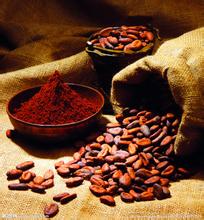
Ethiopian Coffee Culture the Development of Ethiopian Coffee
Ethiopian Coffee has a long History Ethiopian Coffee has a very important history and culture the highest grades of Ethiopian coffee Yega Xuefei G1 G2 Sidamo (Yirgacheffe, Sidamo) are grade 2 and 3 (G2, G3), while sun-processed coffee in eastern Ethiopia is mostly grade 4 or 5 (G4, G5). In many cases, level four coffee is marked as level five.

Introduction to the flavor and taste of the cultural description of the origin of Ethiopian coffee bean story
The origin of Ethiopian coffee bean story, cultural description, flavor and taste introduction there is a small town in southern Ethiopia called Kafa, which is the earliest birthplace of coffee. But now Ethiopia is most famous for coffee beans with the trademarks of Hal, Sidamo, and Yejasuffe. In fact, most of Starbucks' raw materials come from these three brands. Ethiopia is now lost.
The origin of coffee culture, Ethiopia is a mysterious land.
Ethiopia is a mysterious land: magical and mysterious; touching and heartbroken; fertile and dry; fascinating and depressing; tragedy and victory.

Coffee Culture in Ethiopia Coffee Origin
Various forms of coffee cultivation can be found in Ethiopia: everything from wild coffee forests and semi-developed land to traditionally operated plots to modern plantations. About 50% of the coffee is grown more than 1500 meters above sea level. Harrar coffee is the highest growing area of all coffee in Ethiopia. Hara coffee can be divided into long coffee.

Cultural knowledge of boutique coffee coffee originated in Ethiopia
Kafa, Ethiopia, which used to be a small village, has now developed into a region. This area is the first place in the world to find coffee. Coffee trees in many places are transplanted from here. Up to now, there are still more than 5,000 kinds of coffee trees in the region, most of which are not known to the world. Fortunately, these coffee trees have been used by the Ethiopian government.

An introduction to the Coffee Culture in Ethiopia
In many cases, level 4 coffee is marked as level 5 in order to reduce taxes. The current classification is not uniform and messy, because there are also first-and second-tier (Grand G2) Yirga Cheffe processed by tanning, but the highest level of Harald (Harar) is level four (G4). The coffee-producing areas of Ethiopia are Sidamo, Harald and Yegashafi (

Ethiopian coffee bean story features, historical flavor, description of origin culture
Ethiopian coffee bean story features, historical flavor description, origin culture, Ethiopian intellectual property bureau director Getachew Mengistie bluntly pointed out that farmers sell raw beans for $1.45 a pound, while Starbucks sells for $26 a pound in the United States, a price difference of 18 times. The reason is that Ethiopia does not know how to use intellectual property rights to create value for farmers.

A brief introduction to Coffee Culture in Ethiopia
Following caf é comments (Wechat official account vdailycom) found that Coffee Caf é opened a small shop of its own in Ethiopia what tea is to China, tea has such a fine tradition as tea drinking rituals, and Ethiopia also has a very beautiful traditional coffee drinking rituals, although it is not as popular as tea drinking ceremonies by the book. There is no positive in Ethiopia.

Ethiopian Coffee Origin Culture
The birthplace of coffee-Ethiopia. The coffee tree originated in Ethiopia, which was originally a wild plant here, and the name coffee comes from the Ethiopian town of Kaffa. In fact, many coffee trees in Ethiopia are still wild plants, and the coffee grown on this coffee tree is full-grained and slightly alcoholic. Humans may have been in the 9th century.

A brief introduction to the History and Culture of the Origin and Development of Coffee beans in Harald Moka Manor in Ethiopia
Ethiopia has unique natural conditions suitable for growing all imaginable varieties of coffee. As a highland crop, Ethiopian coffee beans are mainly grown in areas between 1, 100 and 2300 meters above sea level, roughly distributed in southern Ethiopia. Deep soil, well drained soil, weakly acidic soil, laterite and soil are soft and contain

The Essex Pavilion of the World Expo tells the Origin of Coffee
Ethiopia has launched nationwide preparations for the Shanghai World Expo, the Ethiopian Ministry of Culture and Tourism announced today. It is reported that the Ethiopian exhibition area at the African Joint Pavilion will tell visitors the story of the origin of coffee and showcase the rich natural and cultural heritage of the East African country. According to the website of the Ministry of Foreign Affairs, Ethiopian Minister of Culture and Tourism Mohamed

The Essex Pavilion of the World Expo tells the Origin of Coffee
Ethiopia has launched nationwide preparations for the Shanghai World Expo, the Ethiopian Ministry of Culture and Tourism announced today. It is reported that the Ethiopian exhibition area at the African Joint Pavilion will tell visitors the story of the origin of coffee and showcase the rich natural and cultural heritage of the East African country. According to the website of the Ministry of Foreign Affairs, Ethiopian Minister of Culture and Tourism Mohamed

Coffee cultivation and Coffee Culture
The legend of the cultivation of coffee and how coffee culture spread around the world has become one of the greatest and most romantic stories in history. Since the shepherds in the Ethiopian desert discovered this thing known as devil beans, they began to chew coffee beans and drink coffee in water. This atmosphere began in Ethiopia and went on an expedition to Arabia, quickly captivating sentient beings and becoming

The common sense of coffee culture Coffee originated in Ethiopia
Ethiopia in East Africa means the land inhabited by people tanned by the sun in ancient Greek. Ethiopia's unique cultural tradition, spectacular scenery, pleasant climate, rich animal and plant resources, important places of interest, hospitality and friendly people make it one of the major tourist destinations in Africa. The name Coffee comes from kaffa in Ethiopia, you know.
Ethiopian Coffee Culture characteristics of Ethiopian Coffee Export
Professional coffee knowledge exchange more coffee bean information please follow coffee workshop (Wechat official account cafe_style) Coffee is the core of Ethiopian culture, coffee production is both a loving labor and an important source of income. This crop has been integrated into the culture and economy of the country. The country is the sixth largest coffee producer, according to reports, in 2018